
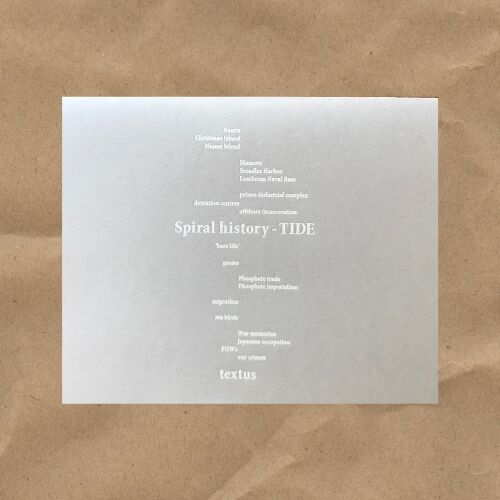
spiral history: TIDE is a bilingual English/Japanese collaborative zine by artist Haji Oh and writer-translator Michiyo Miyake (textus), exploring the layered histories of islands connected to Australia’s offshore detention system.
Tracing histories from the 19th-century guano industry and the migration it generated, through the Japanese occupation during World War II, to contemporary offshore detention policies, this zine reveals how colonialism, migration, conflict, and border control have left their marks on the lives, landscapes, and memories of islands across the Pacific and Indian Oceans.
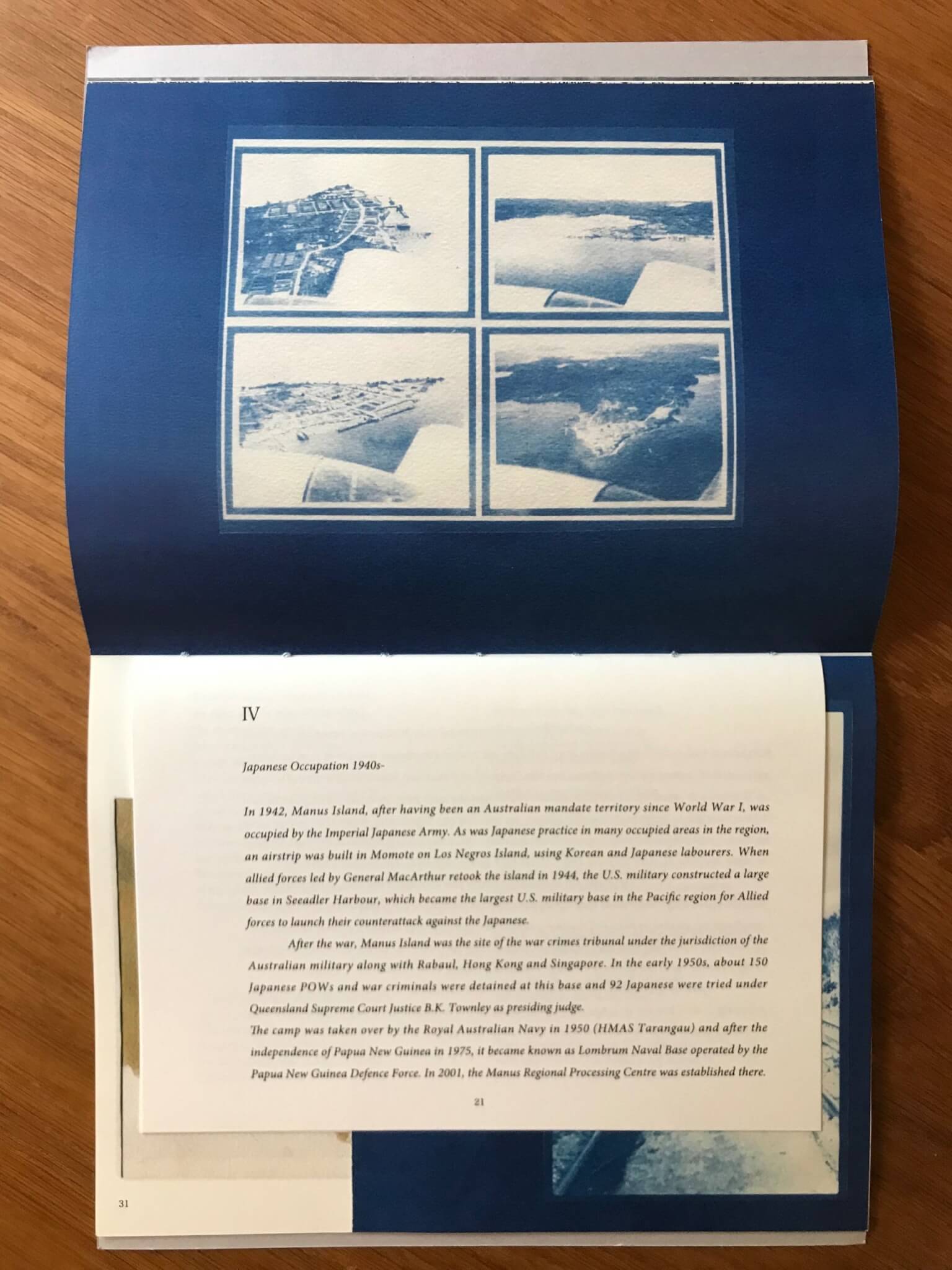
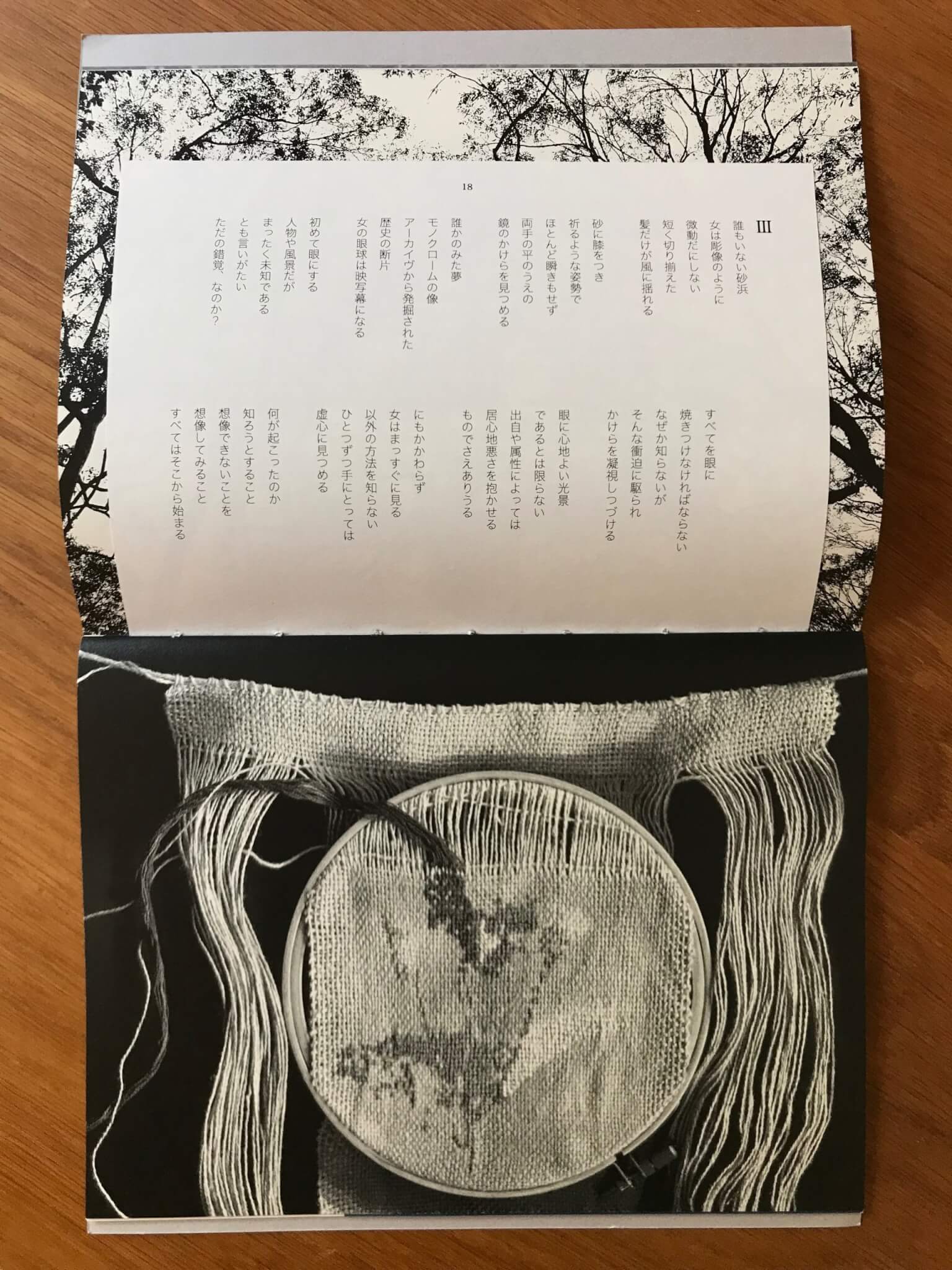
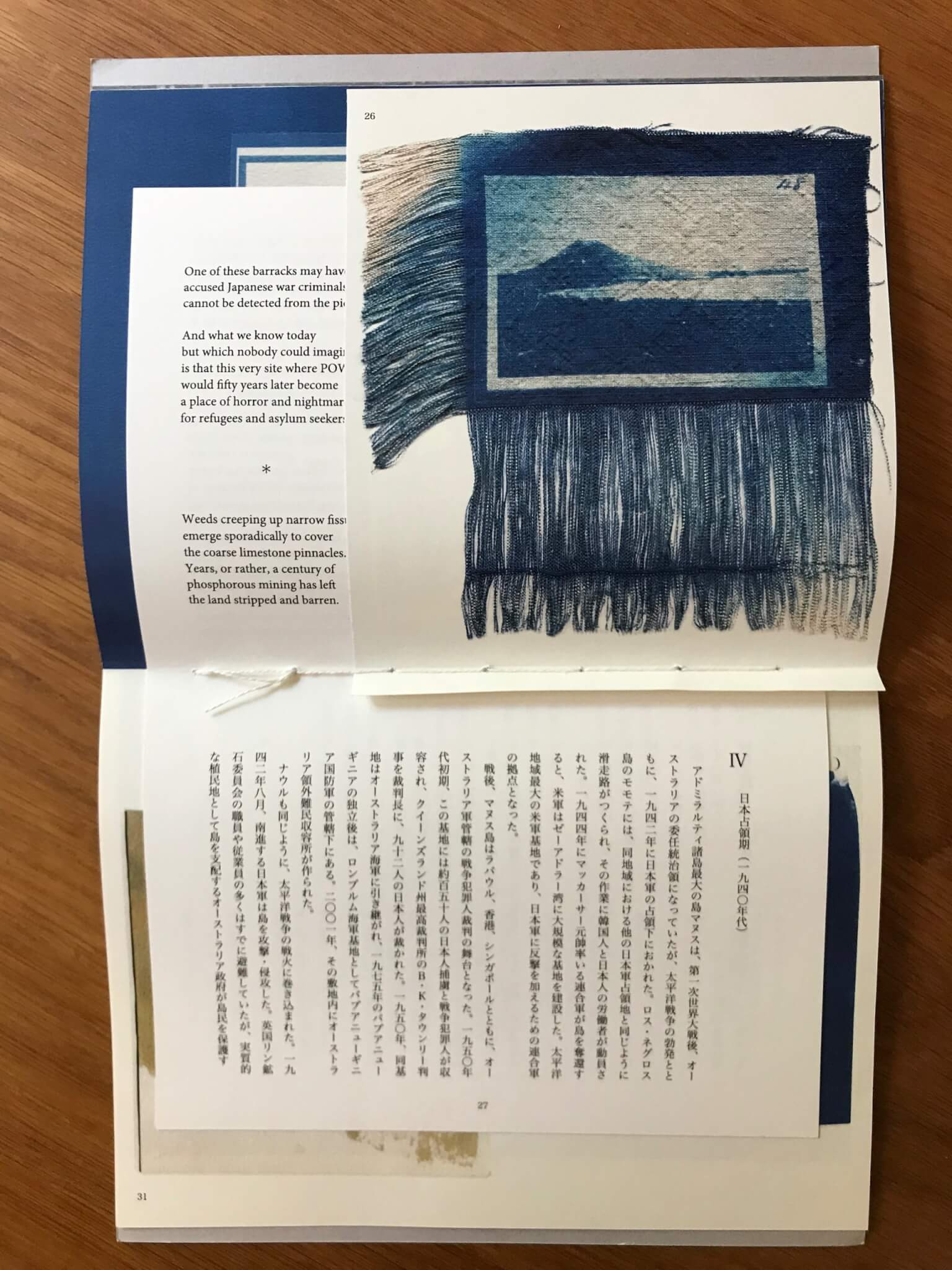
Made using papers of different textures and sizes, the zine brings together English/Japanese texts and poetry, archival photographs created using the cyanotype technique, and images of the Australian bush. Reflecting on the “bare life” of refugees and asylum seekers, the work explores the complex and layered histories connecting Australia, Japan, and islands across the Pacific and Indian Oceans, while inviting imagination towards the memories and experiences of others.
textus: The creative duo of Haji Oh (artist) and Michiyo Miyake (writer/translator). It aims to explore the possibilities of collaborative work between makers of ‘textile’ and ‘text’ – both of which originate from the same Latin word texere, meaning ‘to weave’. The root ‘textus’ means ‘things woven or knitted’ in Latin. The fact that weaving and writing have a common semantic origin interested and inspired them to work together on this theme.
アーティストの呉夏枝と作家・翻訳者の三宅美千代による(textus)の共同制作ZINE。オーストラリアのオフショア収容施設が置かれる島々の歴史をたどる作品です。
19世紀に最盛期を迎えたグアノ産業と、それにともなう人びとの移動、第二次世界大戦期の日本軍による占領、現在のオフショア収容政策に至るまで、島々が経験してきた歴史の流れを描き出します。植民地主義、移住、紛争、そして国境管理が、太平洋・インド洋に広がる島々のコミュニティにどのような影響を及ぼしてきたのかを浮かび上がらせます。
異なる質感と大きさの紙を用いた本作は、英語/日本語によるテキストと詩、サイアノタイプ技法によって制作されたアーカイヴ写真、オーストラリアのブッシュのイメージによって構成されています。難民や庇護希望者の「剥き出しの生」に思いを寄せながら、オーストラリア、日本、太平洋・インド洋地域の島々を結ぶ複雑で重層的な歴史と、他者の記憶への想像力を探る試みです。
textus: オーストラリア在住の呉夏枝(美術作家)と三宅美千代(文筆家/翻訳者)からなる制作デュオ。textusはラテン語で 「織られたもの、編まれたもの」を意味する。〈テキスタイル〉と〈テキスト〉がともに「織る」という意味のラテン語texereを語源にもつことに着想を得て、共同制作を行なっている。

